Blog
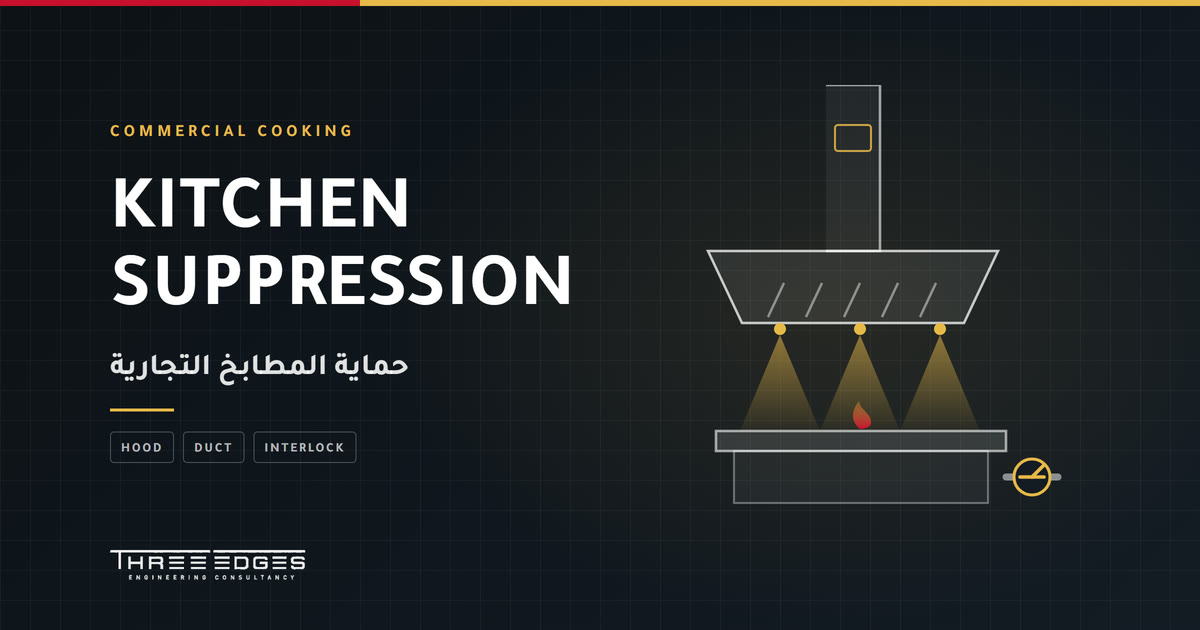
Commercial Kitchen Fire Protection: Beyond the Hood Nozzle
A commercial kitchen is one of the most fire-prone spaces in any building: open heat sources running for hours, cooking oil that ignites at high temperature, and grease building up inside an exhaust duct where nobody sees it. Yet the subject is often reduced to "we installed a suppression system under the hood".
Real protection is a system: the hood, the duct, the suppression unit, the interlocks with power, fuel and ventilation, and then a disciplined cleaning and maintenance programme. This article covers each part and where things go wrong.
Why a kitchen fire is different
Frying oil ignites at a high temperature and holds that heat after the flame is knocked down, so it re-ignites unless the oil mass itself is cooled. What works elsewhere does not work here: you need an agent that forms a soapy foam layer over the oil surface, sealing and cooling at once. That is the role of wet chemical systems listed for cooking applications, which have replaced the older dry chemical units for this specific use.
An old system that still "works" is not automatically acceptable today — and once the cooking line changes it gets worse, because the nozzle layout was designed for a different arrangement.
The hood and the duct: half the system
- The right hood type: appliances producing grease and smoke need a grease-rated hood, not a plain vapour canopy.
- A dedicated, tight duct: an independent grease duct, liquid-tight welds, sloped back to a collection point, not shared with other ventilation.
- Access panels for cleaning: spaced so the whole duct can be cleaned; without them some sections are never touched.
- Clearance or enclosure: to combustibles, or a rated wrap or shaft where the duct runs through the building.
- Fan discharge: away from fresh air intakes and windows, at an adequate height above the roof.
- Make-up air: a calculated quantity. Too little pulls air from the dining area and upsets pressure balance; too much disturbs the smoke before the hood captures it.
Interlocks: what happens the moment it discharges
When the suppression system operates, a simultaneous sequence must follow — and this is where we raise comments most often:
- Fuel is shut off to every appliance under the hood: gas through a manual-reset valve, electricity through its breakers.
- A signal is sent to the building fire alarm system.
- The exhaust fan and make-up air fan are handled per the listed system's design — commonly the exhaust keeps running while make-up air stops.
- A manual pull station on the exit path from the kitchen works even with the power off.
The recurring defect: a sound suppression system with no effective fuel shut-off, so the flame is knocked down while the burner keeps heating the oil until it re-ignites.
Portable extinguishers: a supplement, not a substitute
The kitchen is provided with extinguishers rated for cooking oil fires near the cooking line, used after the fixed system has operated, not before. General-purpose extinguishers are not the right choice for burning oil.
Cleaning and maintenance: where protection is usually lost
Accumulated grease is the real fuel for a duct fire. Sources agree that cleaning frequency follows cooking volume and type: a kitchen running around the clock, or using solid fuel, needs a far shorter interval than a light seasonal operation. The numeric values differ between editions and authorities, so they are taken from the locally adopted requirement and written into a documented programme.
- Periodic servicing by a qualified company, replacing fusible links and checking the agent tank and nozzles.
- Cleaning the hood, filters and duct through to the fan, with a record of dates and the sections cleaned.
- Re-assessing the nozzle layout after any change of appliances or their positions — the item that is always forgotten.
- Keeping grease filters in place during operation; running the hood without them sends grease straight into the duct.
Decisions made at design stage
Most kitchen problems trace back to early architectural decisions: where the kitchen sits, how the duct reaches the roof, whether it passes through occupied spaces, how the kitchen is separated from the dining area, and where make-up air comes from. Correcting any of these after construction is expensive, which is why they are reviewed early as part of the systems design.
How Three Edges can help
- Reviewing the protection systems design for the kitchen: hood, duct, suppression and interlocks.
- Fire alarm system design and tying the kitchen signals into the cause-and-effect matrix.
- Codes and standards compliance, and fixing the governing reference for your project.
- Assessing existing systems in operating restaurants and hotels.
Frequently asked questions
Are ceiling sprinklers enough for a kitchen?
No. Ceiling sprinklers are part of protecting the building, but they do not address an oil surface fire under the hood or a fire inside the duct; that is the job of a dedicated system.
We swapped a fryer for a griddle — does the system change?
Usually yes. Nozzle layout and agent quantity depend on appliance type, size and position, so any change calls for re-assessment by a qualified party.
How often should the duct be cleaned?
It depends on cooking volume and fuel type, and comes from the adopted requirement. The practical rule: if there is a measurable grease layer, the interval is too long whatever the schedule says.
What about a mall with several restaurants?
That needs a building-level view: duct routes, separation of each unit, signals tied back to the control room, and one common cleaning and inspection procedure.
Have a commercial kitchen in design, or an operating facility that needs assessing? Request a fire safety review and we will set out the gaps and their priorities.
References
- NFPA 96 — Standard for Ventilation Control and Fire Protection of Commercial Cooking Operations
- UL 300 — test requirements for fire extinguishing systems protecting cooking equipment
- Saudi Fire Code SBC 801 — Saudi Building Code portal
