Blog
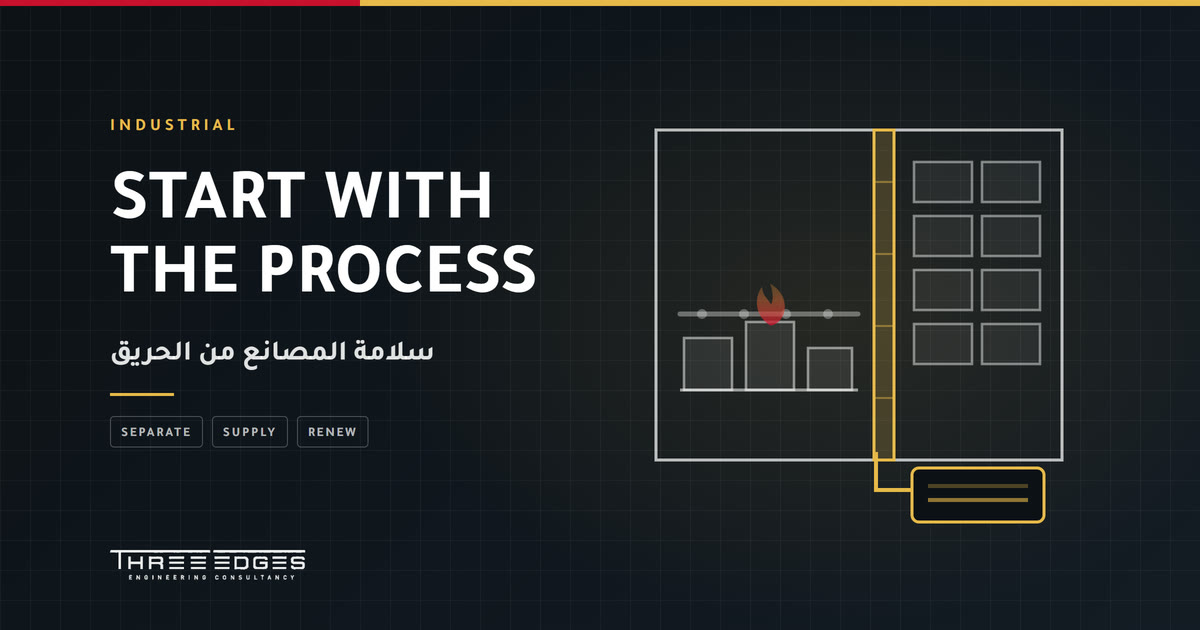
Factories: Fire Safety When the Process Itself Is the Hazard
In an office or a residential building the fire hazard comes from the contents: furniture, paper, equipment. In a factory it is fundamentally different — the hazard is the process itself: heat, sparks, solvents, dust, and materials stacked in quantities that exist in no other kind of building.
So a factory is not designed as a "stronger" version of an ordinary building. It follows a different logic, and that logic starts with understanding what happens on the lines.
Start with the process, not the building
The first question in any factory is not "how many extinguishers do we need?" but: what is made, from what materials, in what quantities, and at exactly which step does the hazard appear?
- The materials: flammable liquids, gases, powders, oxidisers. Each behaves completely differently in a fire.
- Quantities and where they sit: a quantity on the production line is not the same as a quantity in a store, which is not the same as a quantity in a tank.
- Ignition sources: furnaces, welding, motors, static electricity in powder handling.
- Process dust: a hazard that gets badly underrated, with its own requirements for collection, cleaning and venting.
Everything else follows from that analysis. A factory designed without it gets systems that do not match its real hazard — too much in one place and not enough in another.
Separation: the cheapest protection in a factory
Before any extinguishing system, separation is what decides the size of the loss:
- Separating production from stores: one of the most frequently repeated requirements in Civil Protection conditions, and the logic is simple — a fire on a line should not reach the factory's entire stock.
- Safe distances between buildings to stop fire moving from one building to the next across the site.
- Isolating the high hazards: solvent stores, boiler rooms, fuel stations, generators.
- Separating offices and occupied areas from production halls, because life safety follows a different logic from property protection.
Extinguishing and the water supply
The choice of system follows the material, not habit: sprinklers in most cases, and gaseous, powder or foam systems in specific cases depending on what is stored. Storing materials at height follows a different logic again, which we set out in warehouse fire protection.
The item most often overlooked is the water supply. A factory needs a source dedicated to firefighting — ground or elevated tanks of a calculated capacity with suitable pumps — not reliance on the city network alone. Tank capacity comes from the design scenario and its duration, not from a number in common use.
Electrical and gas: where most fires start
Most factory fires start electrically or from a fuel leak. So wiring, earthing, distribution boards and gas installations are reviewed as part of the fire safety file, not as a separate electrical item. Safety documentation for the machines and materials in use is usually required with the file as well.
The permit is renewed — and the factory changes
The safety permit for industrial facilities is renewed periodically, commonly each year. That is not paperwork; it is an acknowledgement of something true: a factory changes constantly — a new line, a substitute raw material, an extension to the store, a machine moved from one place to another.
So the factory needs an internal rule: any change to materials, process or storage is reviewed before it happens, not at renewal time. We covered the two-stage approval route in Civil Protection approval.
How Three Edges can help
- A fire and life safety strategy built on an analysis of the process and the materials.
- Reviewing the protection systems design: system selection, water supply, and separation.
- Assessing existing factories and comparing operational reality with what was approved.
- Coordinating with the authorities and handling periodic renewal.
Frequently asked questions
We have sprinklers — is that enough?
The right question is: designed for which commodity and which storage height? A system designed for an old stock profile may not suit what is stored today.
We added a new production line — do we need a review?
Yes, if it changed the materials, the quantities, the ignition sources or the compartmentation. This is the case most often discovered at renewal instead of being handled when it happened.
What is the most dangerous thing you find in factories?
Flammable materials stored inside the production hall for convenience, and no separation between production and the store.
Are the Civil Protection requirements enough on their own?
They are the regulatory floor. Insurers often require more for property protection, and it is better to know what they want before the design is fixed.
Planning a factory, or operating one and want it reviewed? Request a fire safety review and we will start from the process itself.
References
- The Egyptian code for design and execution requirements for protecting facilities from fire
- NFPA 13 for sprinkler systems, and NFPA 72 for detection and alarm
- Conditions for obtaining Civil Protection approval for industrial facilities
